
About
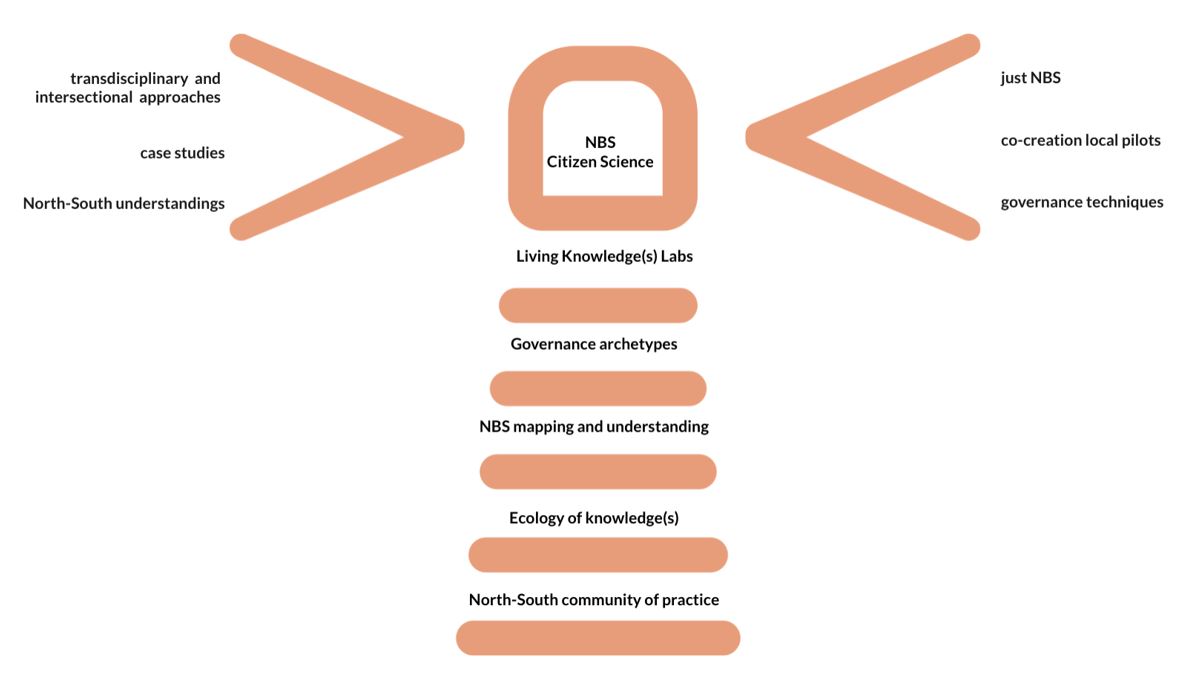
1. About the TRANS‑lighthouses Project
TRANS‑lighthouses is a Horizon Europe Project funded by the European Union (May 2023 – October 2026), with a budget of 5.9M euros under grant agreement n.º 101084628.
- > The project focuses on understanding the material and immaterial benefits of nature-based solutions (NBS) and how they can support socially and ecologically just urban environments.
- > Its goal is to bring socio‑political perspectives into public discussions on NBS, encouraging long-term and systemic change.
2. The Strovolos Living Knowledge Lab (LKL)
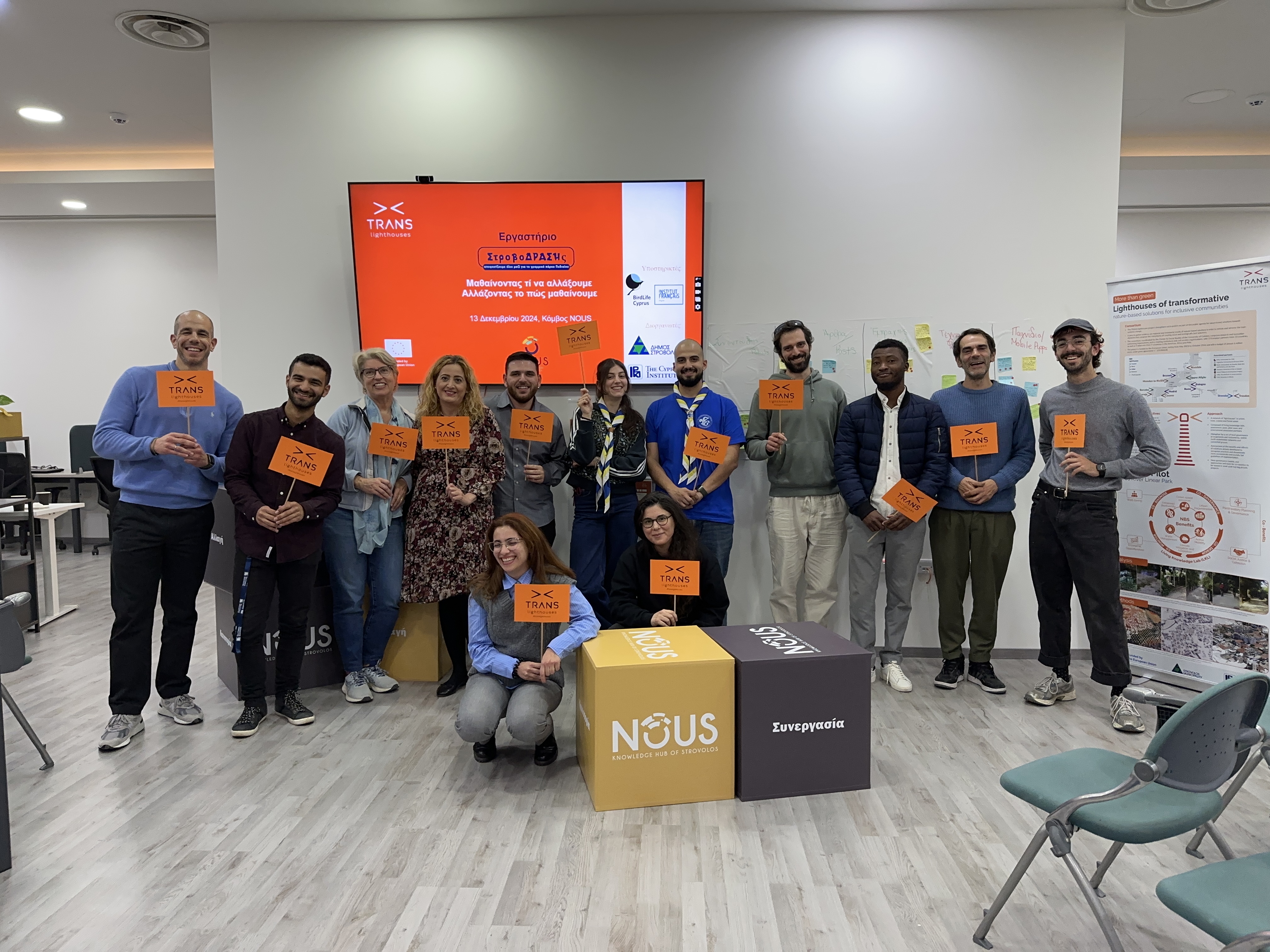
- > The Strovolos pilot area was developed through a co-creation process involving the Municipality's administration and elected representatives, residents, NGOs, associations, artists, and educators.
- > These groups formed the LKL, a space where local voices shaped the vision, identity, and function of the Strovolos' NBS pilot.
- > The LKL ensured that the proposed solutions align with local needs, values, and environmental conditions.
3. Co‑diagnostic: Pedieos River Linear Park
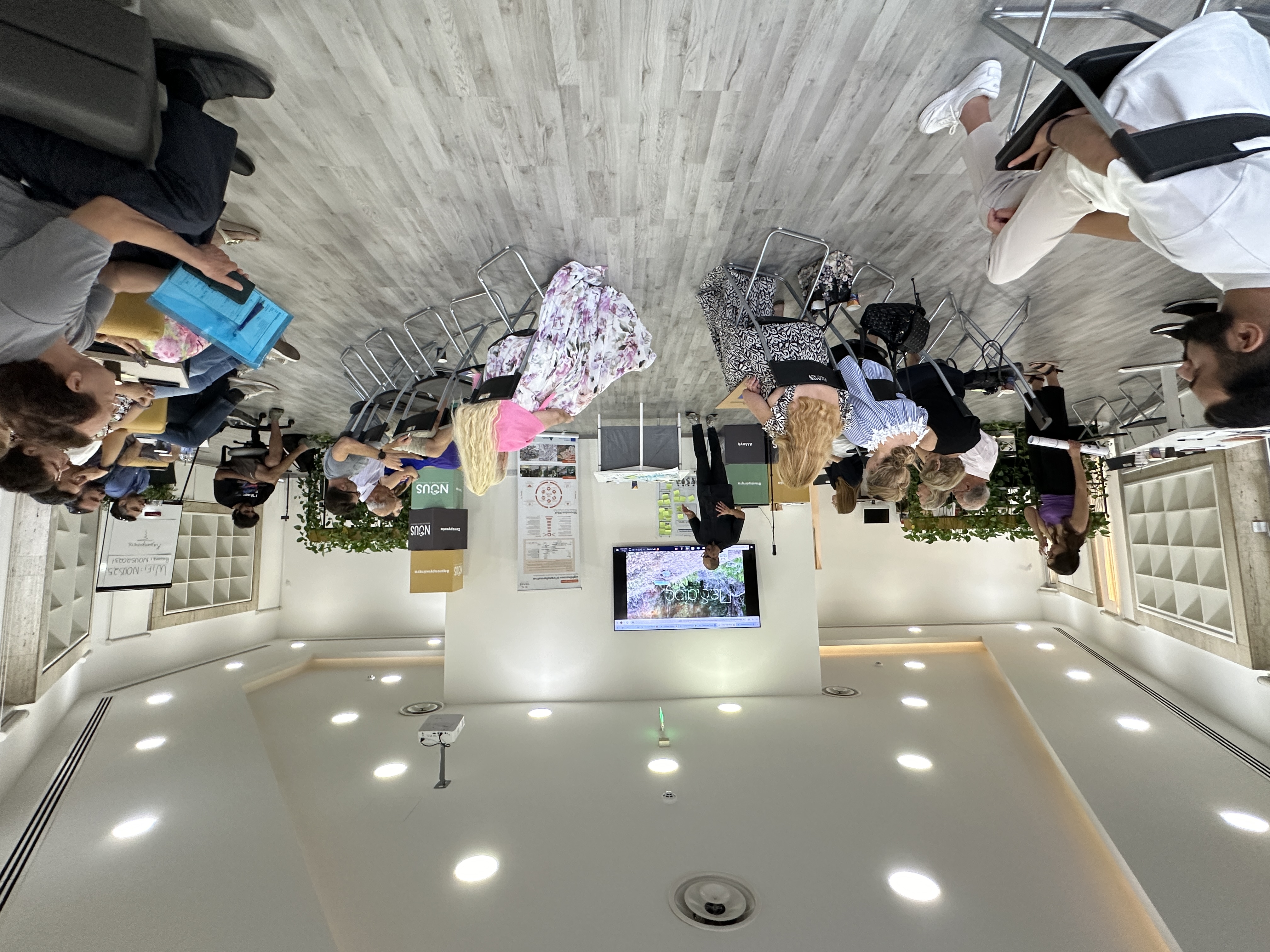
- > During the co-diagnostic phase, the team held meetings, informative sessions, and interactive workshops.
- > Participants discussed accessibility, mobility, public space activities, biodiversity, and environmental quality.
- > The community expressed the need for more social spaces along the river that balance human presence with natural habitats.
- > Artistic and educational contributions helped the group rethink nature as a source of memory, culture, rest, and well‑being, inspiring the idea that nature should also "have a voice" in shaping NBS.
4. Co‑designing with Digital Tools
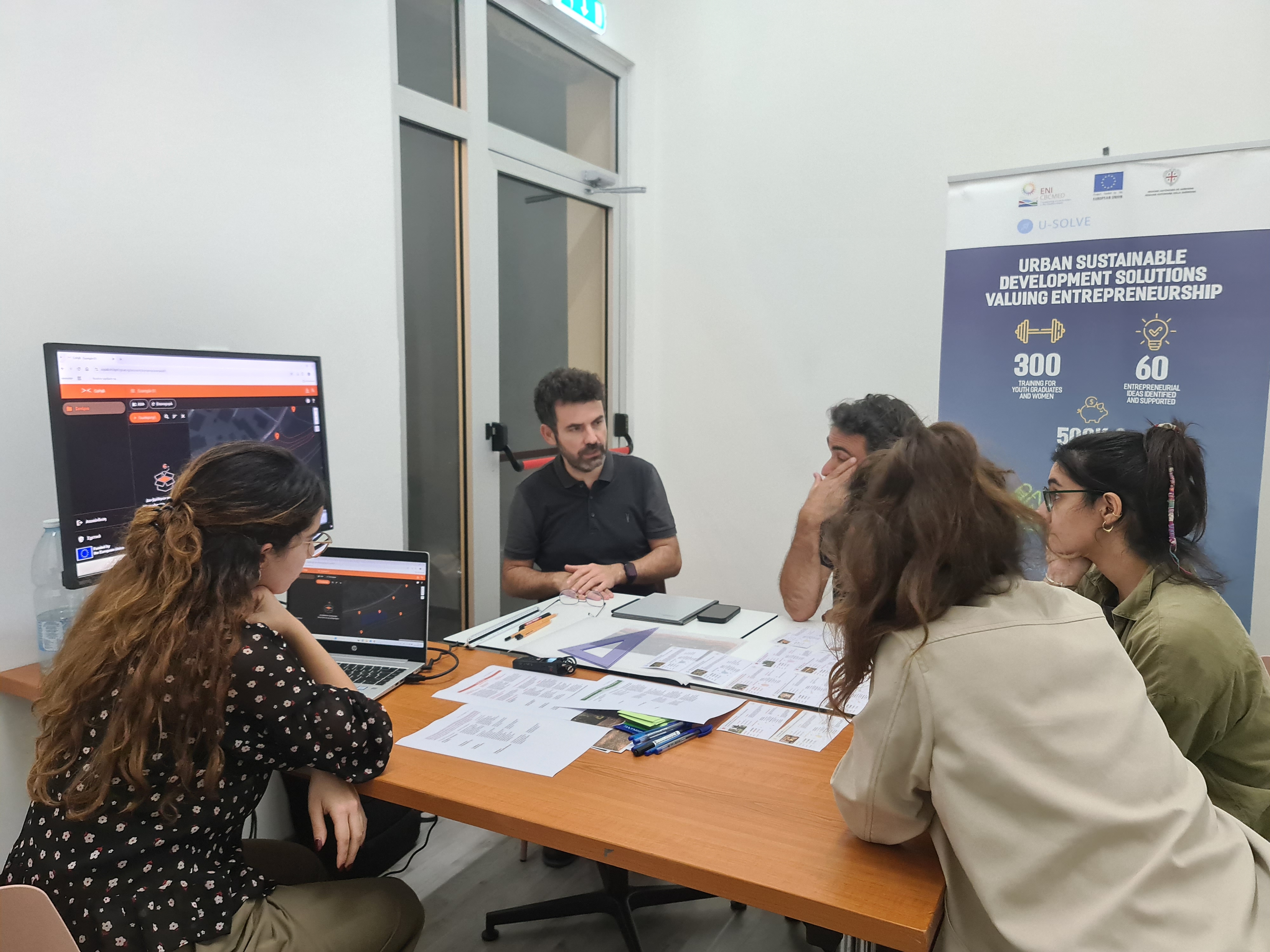
- > The LKL collaborated in a hands‑on co‑design workshop using a digital platform for participatory design and budgeting (CoPaB).
- > Three design scenarios were created for the pilot area, reflecting community's ambitions, expectations, and creativity.
- > These ideas were merged into a final proposal and reviewed by the local community, the Water Development Department, and the Strovolos Municipality.
- > The final design of the Strovolos pilot area meets all regulatory and technical requirements for nature-based solutions.
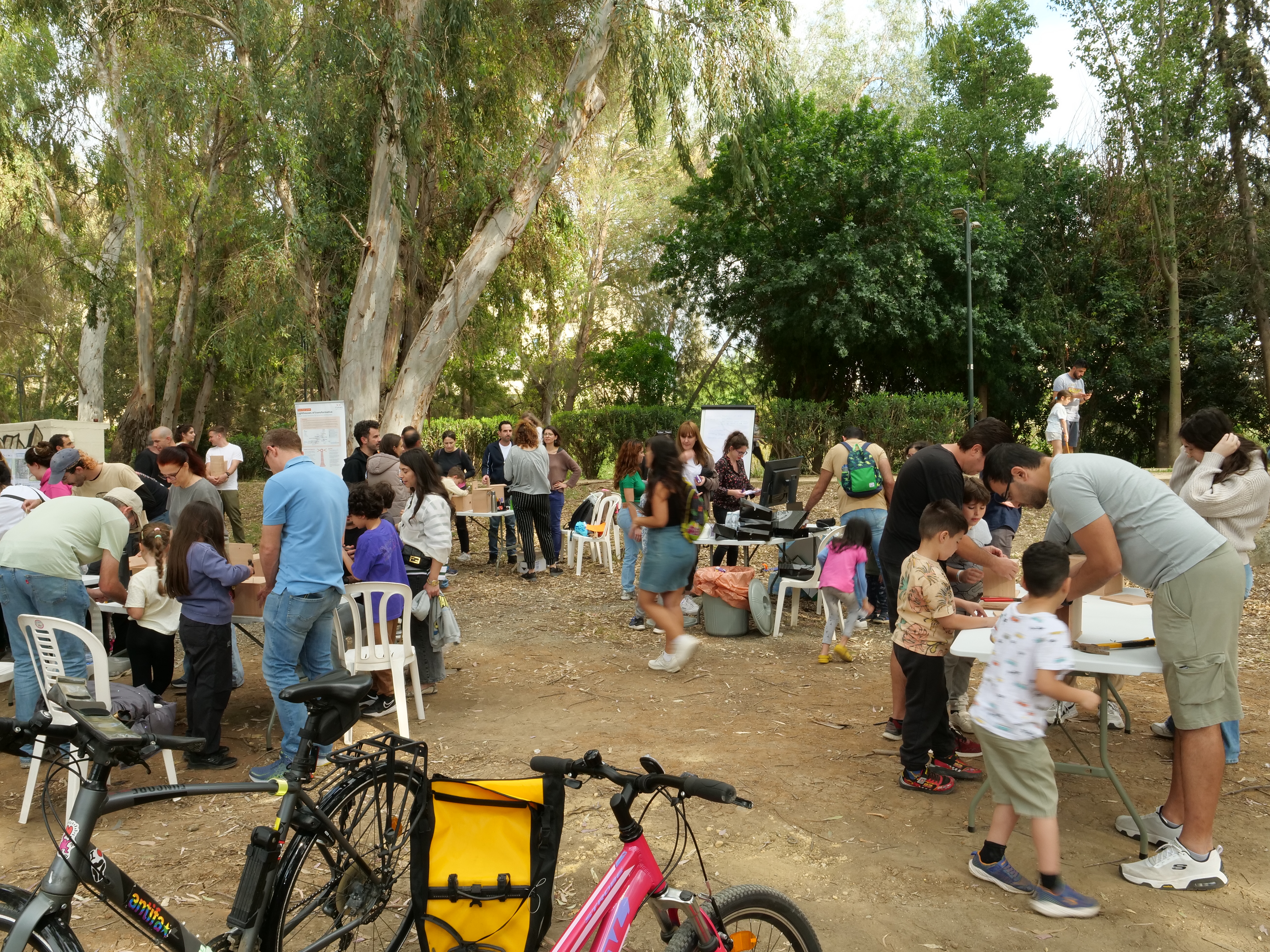
5. Co‑implementation with the Community
- > Parts of the pilot area were built by local residents, strengthening their sense of ownership.
- > Reclaimed and reused materials were incorporated into community-built creations that enhance biodiversity and provide space to support new local activities.
- > A series of co‑creation and placemaking workshops invited people of all ages to imagine how inclusivity, diversity, and shared use could be expressed in the space.
6. Co‑monitoring and Co‑evaluation
The LKL continues even after the project's completion. Together with the community, the team monitors:
- > Environmental performance
- > Social use and impact
- > The adaptability of the space to evolving needs
This ongoing collaboration supports a resilient, welcoming, and evolving public green space. The pilot contributes to a growing network of community-led NBS initiatives across Cyprus.
7. Co‑governance with Local Stakeholders
The co-governance model brings together the LKL, the municipality, and local organizations. Together, they developed a Code of Conduct outlining:
- > A shared vision for the pilot
- > Roles and responsibilities
- > Co-management principles for long-term stewardship
This document ensures a stable, adaptive, and collaborative partnership for the future.
8. Reserve the Space
This community-led NBS urban green space is available for:
- > Educational workshops
- > Community gatherings
- > Creative and cultural events
- > Environmental activities
- > Small group events and social initiatives
By reserving and using the space, you support a broader movement promoting local engagement, environmental stewardship, and community-based nature-based solutions.